


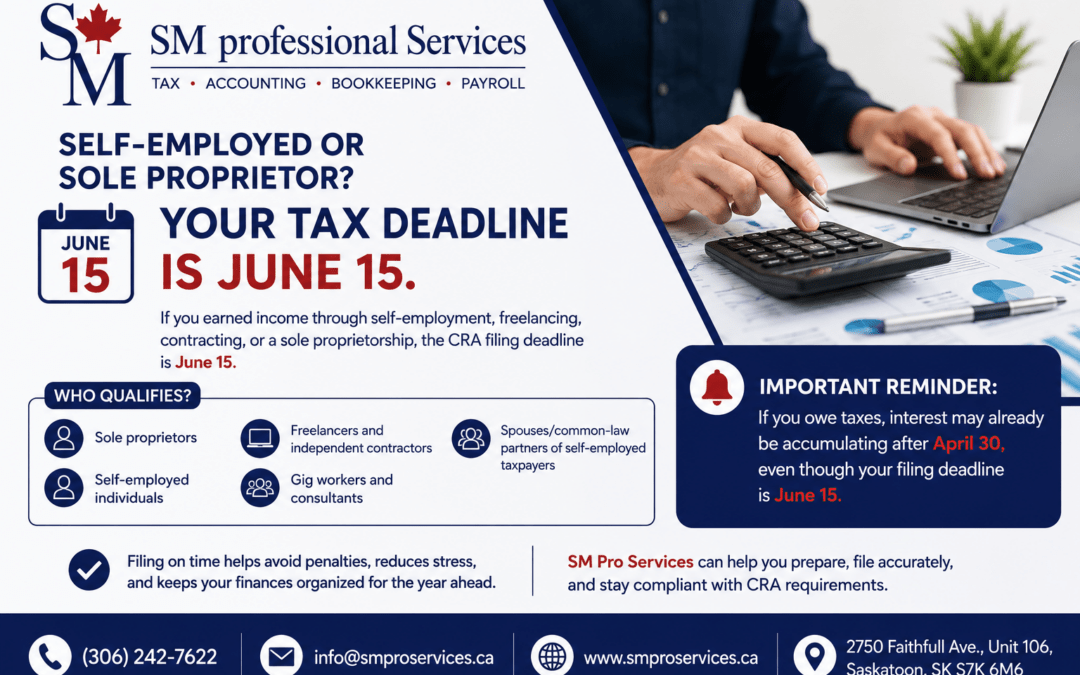
For many Canadians, tax season ends on April 30. However, if you are self-employed, a freelancer, independent contractor, consultant, or sole proprietor, your filing deadline is different. The self-employed tax deadline Canada follows is June 15, giving business owners and independent workers additional time to prepare and submit their returns.
Understanding this deadline is important because although the filing date is extended, any taxes owing may already begin collecting interest after April 30. Missing deadlines or misunderstanding CRA requirements can lead to unnecessary stress, penalties, and financial complications.
At SM Professional Services, we help self-employed Canadians stay organized, compliant, and confident during tax season. Whether you run a small business, work in the gig economy, or earn freelance income, filing accurately and on time can protect your finances and help your business grow.
Who Qualifies for the June 15 CRA Deadline?
The CRA June 15 deadline applies to individuals who earn income through self-employment activities. This includes many different professions and work arrangements across Canada.
Sole Proprietors
If you operate your business under your personal name or a registered business name without incorporating, you are considered a sole proprietor. Sole proprietors report business income on their personal tax return.
Freelancers and Independent Contractors
Freelancers in industries such as graphic design, writing, marketing, photography, consulting, and IT services generally qualify for the June 15 deadline. Independent contractors working for multiple clients also fall into this category.
Self-Employed Individuals
Anyone earning income independently rather than through traditional employment may qualify as self-employed. This can include tradespeople, healthcare professionals, consultants, and service providers.
Gig Workers and Online Entrepreneurs
The growth of the gig economy means more Canadians are earning income through delivery services, ridesharing apps, online platforms, or digital businesses. These workers are often responsible for reporting self-employment income correctly.
Spouses or Common-Law Partners
Even if one spouse is not self-employed, they may still receive the June 15 filing extension if their spouse or common-law partner qualifies as self-employed.
Important Difference Between Filing and Payment Deadlines
One of the biggest misunderstandings surrounding the self-employed tax deadline Canada businesses follow is the difference between filing your return and paying taxes owed.
While self-employed individuals have until June 15 to file, interest on taxes owing may start accumulating after April 30. This means waiting until June to pay can increase the total amount owed.
Why This Matters
Interest charges from the CRA can grow quickly if taxes remain unpaid. Filing late can also lead to penalties that add unnecessary costs.
To avoid these issues:
- Estimate taxes early
- Organize income and expenses throughout the year
- Make payments before April 30 if possible
- File accurately before June 15
Common Tax Mistakes Self-Employed Canadians Make
Managing self-employed taxes CRA regulations require can become complicated without proper planning. Many Canadians accidentally make mistakes that trigger audits, reassessments, or penalties.
Poor Expense Tracking
Keeping incomplete records of business expenses is a common issue. Self-employed individuals should maintain receipts, invoices, mileage logs, and bank statements throughout the year.
Mixing Personal and Business Expenses
Using the same account for personal and business transactions can create confusion and increase audit risks.
Missing GST/HST Requirements
Many freelancers and contractors forget to register for GST/HST once their revenue exceeds the CRA threshold.
Forgetting Installment Payments
Some self-employed individuals are required to make quarterly tax installment payments. Missing these payments can result in interest charges.
Filing Late
Even with the June 15 extension, delaying tax preparation until the last minute increases the chance of errors and missing documents.
Benefits of Filing Your Taxes Early
Although self-employed taxpayers have extra time, filing early still provides several advantages.
Faster Refunds
If you are entitled to a refund, filing earlier means receiving your money sooner.
Better Financial Planning
Knowing your tax balance earlier helps with budgeting, debt management, and business planning.
Reduced Stress
Tax deadlines can become overwhelming. Filing early eliminates last-minute pressure and reduces anxiety.
Improved CRA Compliance
Accurate and timely filing helps maintain good standing with the CRA and reduces the risk of audits or penalties.
How SM Professional Services Can Help
Preparing self-employed taxes requires attention to detail, accurate bookkeeping, and knowledge of current CRA rules. At SM Professional Services, we assist freelancers, sole proprietors, contractors, and small business owners with professional tax preparation and filing services.
Our team can help you:
- Organize financial records
- Identify eligible deductions
- Prepare accurate tax returns
- Reduce filing errors
- Meet CRA deadlines
- Stay compliant with changing tax regulations
We understand that every self-employed business is different. Whether you operate a side hustle, a growing small business, or a full-time consulting practice, we provide tailored tax support designed for your situation.
Read more about our blogs at https://smproservices.ca/blog/
For official CRA filing information, visit the Government of Canada website:
Canada Revenue Agency
Final Thoughts on the Self-Employed Tax Deadline Canada
The self-employed tax deadline Canada uses gives freelancers, contractors, and sole proprietors additional time to file their taxes until June 15. However, understanding that payment interest may begin after April 30 is critical for avoiding unnecessary charges.
Staying organized, filing accurately, and working with experienced professionals can help make tax season much easier. SM Professional Services is here to support self-employed Canadians with reliable guidance, accurate filings, and personalized service throughout the tax season.
If you are self-employed, now is the right time to organize your records, review your obligations, and ensure your return is filed correctly before the CRA June 15 deadline.